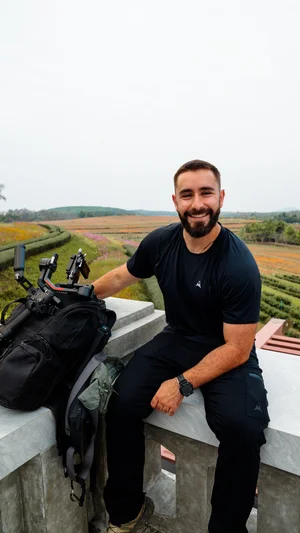
Flying a Drone in Thailand: Our Experience, Registration & Permits
When we were planning our trip to Thailand, we considered bringing our drone. Before we left, we spent some time looking up the regulations and trying to figure out what we needed to do to fly it legally.
If bringing a drone on your trip is something you are considering as well, we hope this post helps. We’ve put together the information we found while preparing for our trip and included our own experience with the registration process.
Our Experience
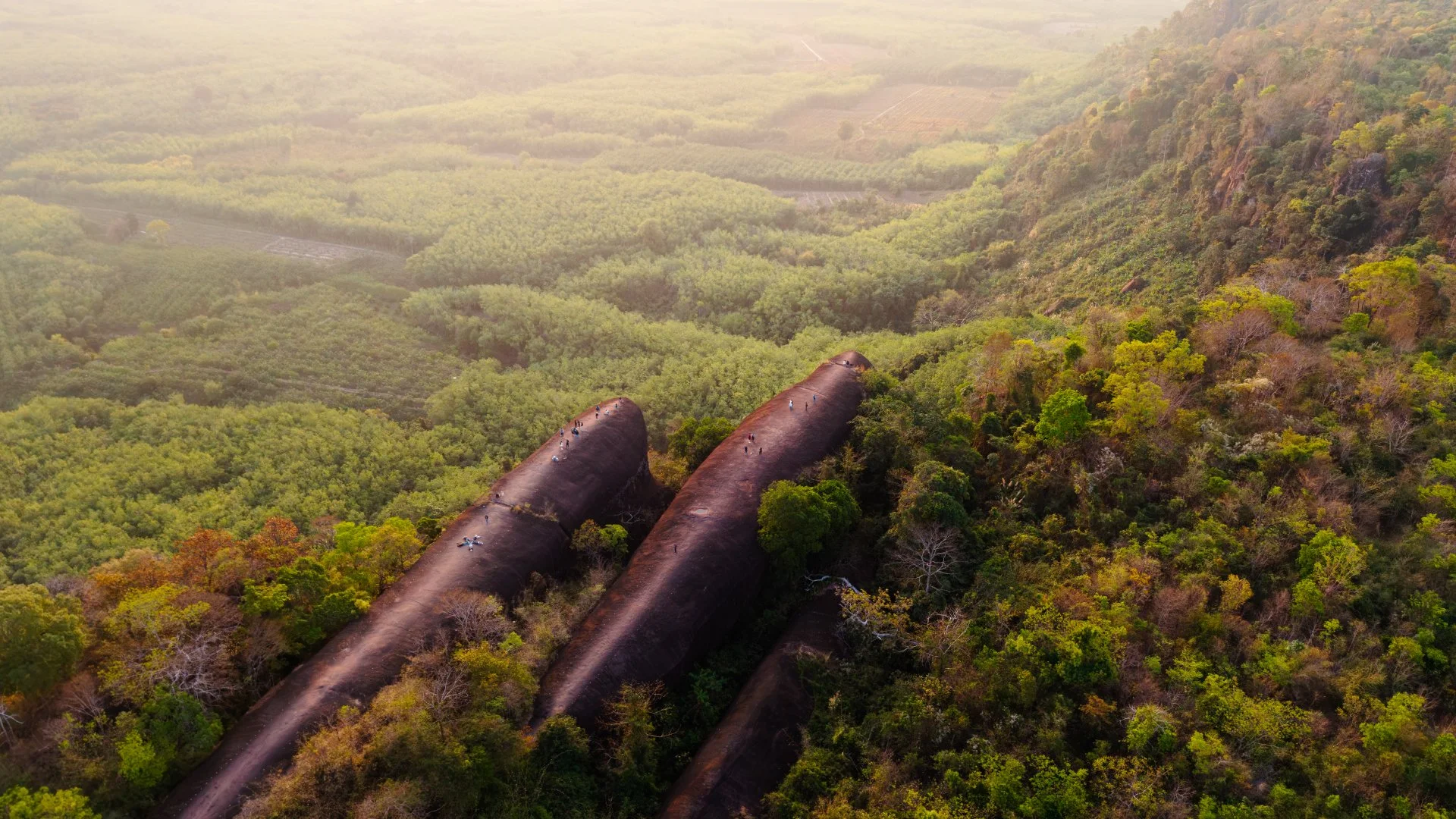
Three Whale Rocks from the Sky, Bueng Kang, Thailand.
Trying to Do It Ourselves
I initially tried to handle the permit process on my own after going through a company to purchase the drone insurance. From what I had seen online, it sounded like something that should be fairly straightforward to do yourself.
But once I actually started, I quickly realized it would be more complicated than expected and take more time than I had planned.
A Note on the Thai Phone Number
Having a Thai phone number does not mean you need to be the owner of that number. It simply means that your registration will be tied to that number, and you won’t be able to create another account with the same number.
If you have a friend who can help with this, it can save you a bit of a headache.
Where We Got Stuck
The insurance part was fairly easy to sort out, but I ran into issues when trying to complete the NBTC registration.
For our DJI Air 3S, the serial number is located on the back of the controller, which has a textured surface. This made it very difficult to capture a clean, readable photo.
I tried uploading the image multiple times, used different devices to take the photo, and even edited it, but nothing was accepted.
After several days of trying and sending emails without getting a response, I was still stuck.
Why We Ended Up Using a Service
At that point, I decided to go back to the company that provided the insurance and ask them to help me complete the process.
In total, this cost us about $125 USD. While it wasn’t ideal, they clearly understand the process much better and likely have ways of resolving issues that I didn’t.
How Long Did It Take in the End
Once I reached out and sent them all the required information, everything was completed within about two days. That included both the NBTC registration and the CAAT permit.
Before that, we had already spent almost two weeks in Thailand without being able to fly the drone.
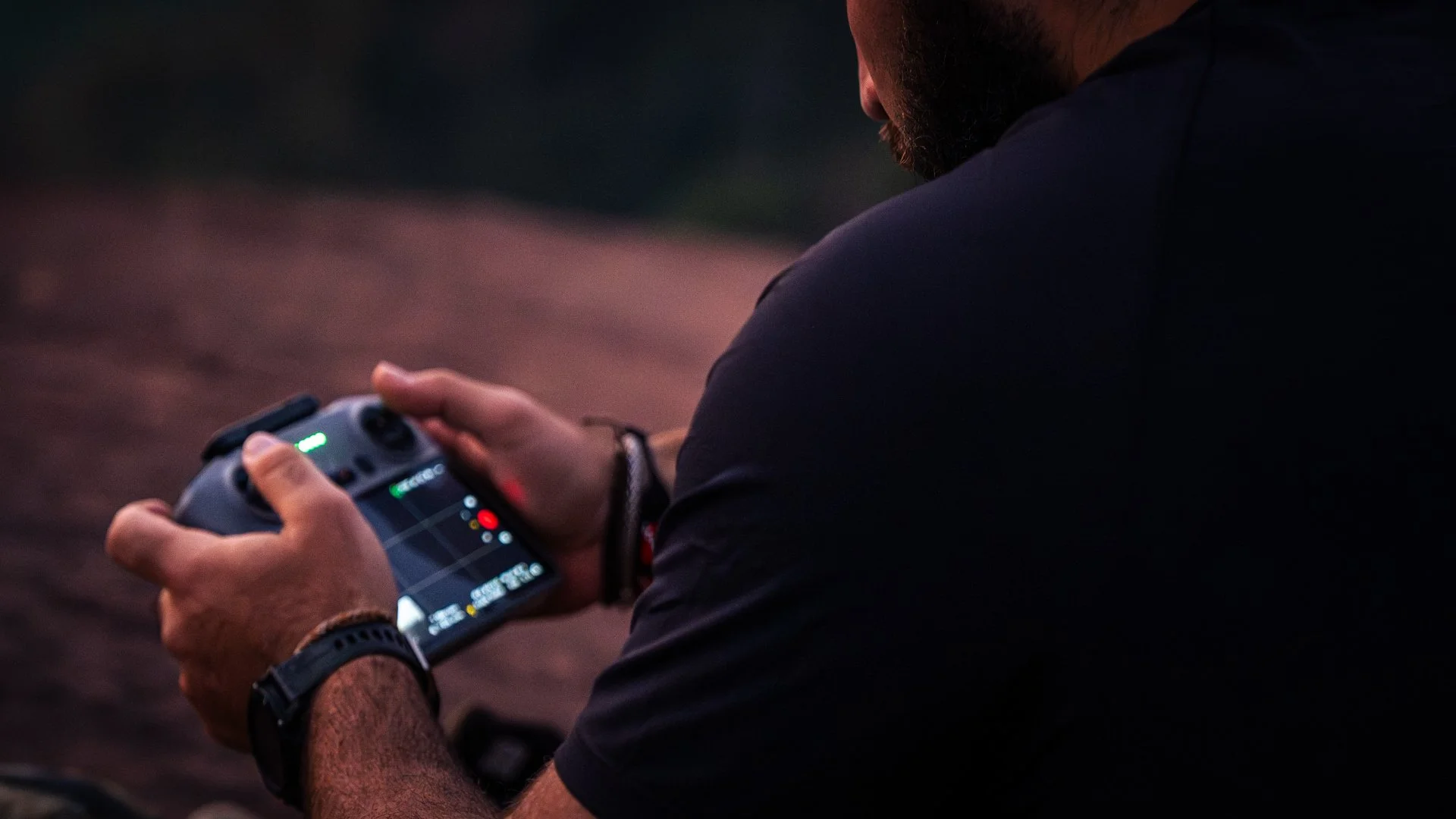
Flying a drone during sunrise in Thailand.
Would We Do It Again?
I’m not saying every situation will be the same. Some people do manage to complete the process on their own.
But in our case, if we were to do it again, we would probably go straight through a service to save time and avoid the back and forth.
I’ve also seen people flying drones without going through this process. Personally, I wouldn’t recommend it. While the regulations can feel strict and a bit complicated for travelers, having your drone registered and insured is still the safer option.
Which drones need to be registered?
In Thailand, drones equipped with a camera or any type of recording device must be registered before they can be flown legally, even if they are very small. Since most drones that travellers bring on their trips are used for photography or video, this means that many of the popular travel drones fall under these regulations.
In practice, this usually involves completing registrations with:
The Civil Aviation Authority of Thailand (CAAT)
The National Broadcasting and Telecommunications Commission (NBTC)
You will also need drone liability insurance before completing the CAAT registration.
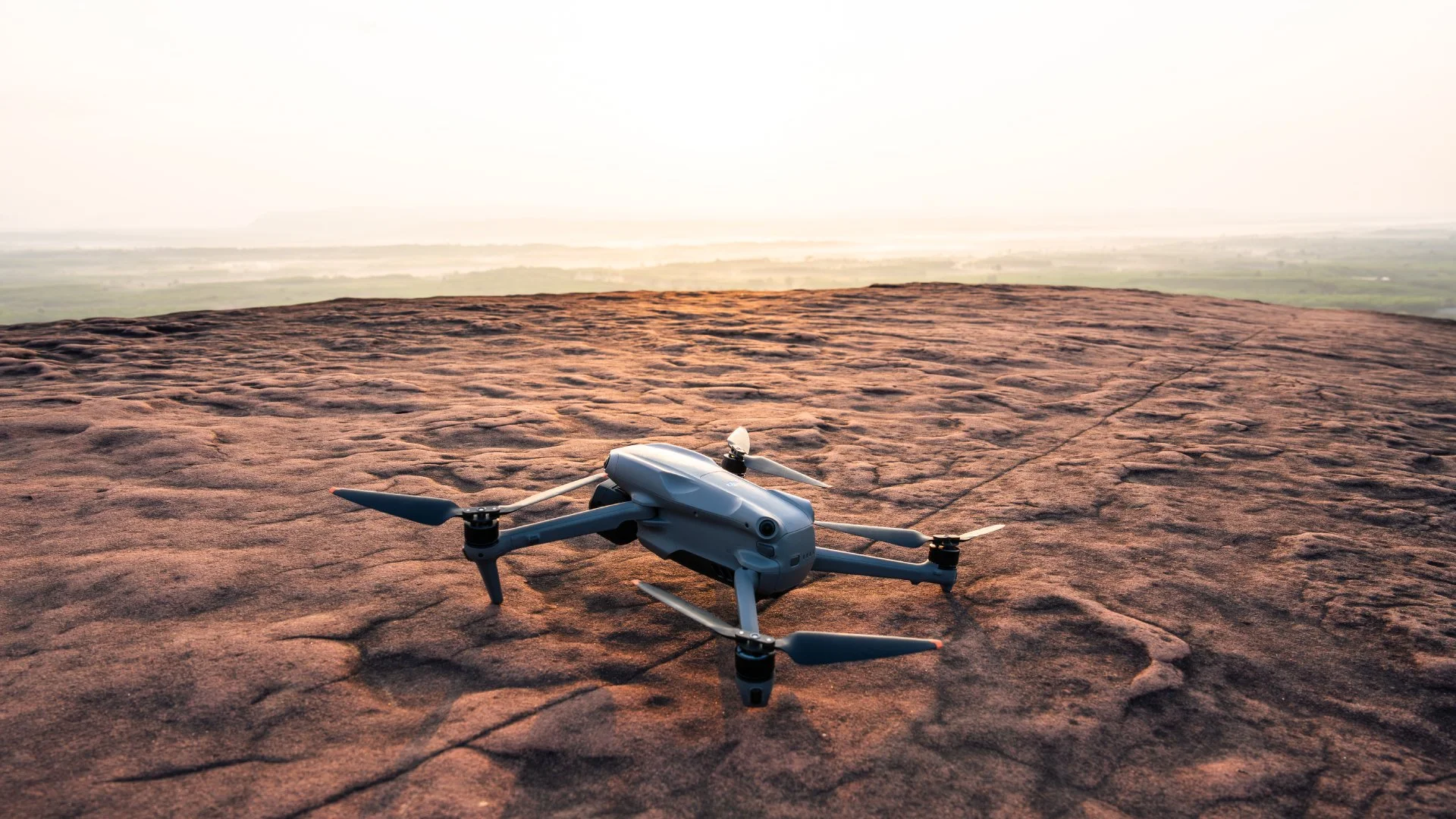
Drone before take off at Three Whale Rocks, Thailand.
Thailand Drone Insurance
Before registering your drone with CAAT, you need third-party liability insurance. This type of insurance covers potential damage caused by your drone.
The insurance we found online costs roughly $15–25 USD.
Drone Registration with CAAT (Civil Aviation Authority of Thailand)
Registration with CAAT is free and can be completed online through their portal.
Website:
uasportal.caat.or.th
To complete the registration, you will also need:
a Thai phone number
a registered address in Thailand
Steps:
Create an account on the portal.
Upload the required documents:
proof of ownership or purchase receipt
a photo of the drone (including the serial number)
drone insurance
your passport and immigration stamp
After submitting your application, you will receive a registration number.
This number must be written on or attached to your drone.You will also need to complete a 40-question timed pilot test on the portal.
Once you have passed the test, you can download your pilot license from the CAAT portal.
Drone Registration with NBTC (National Broadcasting and Telecommunications Commission)
In addition to CAAT registration, drones must also be registered with the NBTC.
Website:
anyregis.nbtc.go.th
Cost: approximately $7 USD
Steps:
Create an account.
Complete the electronic application form.
Attach supporting documents such as:
passport
visa or entry stamp
Pay the registration fee.
The registration certificate will be sent to you by email once the application has been processed.
How long does the registration process take?
Processing times can vary depending on how quickly your documents are approved. Some travellers report waiting several weeks for their CAAT registration to be processed.
Because of this, it’s generally a good idea to start the process well before your trip if you plan to complete the registration yourself. However, this can sometimes be a bit tricky, since the CAAT portal requires a Thai phone number and a registered address in Thailand, which many travellers only obtain after arriving in the country.
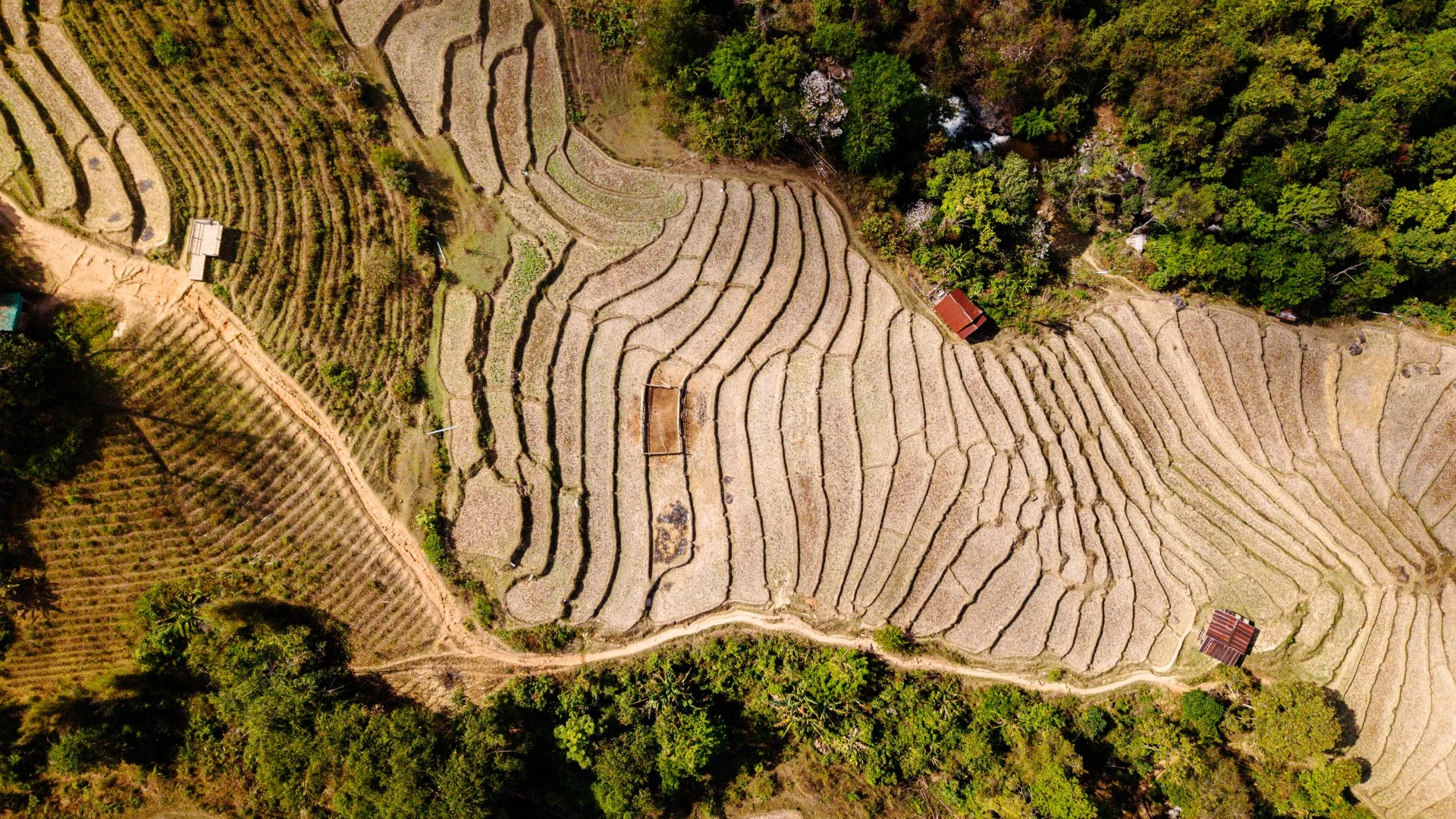
Top-down shot of a rice field in Doi Inthanon National Park, Thailand.
Where you cannot fly a drone in Thailand
Even if your drone is properly registered, there are still several places where flying is not allowed or restricted.
In general, drones cannot be flown:
near airports or airfields
over large crowds of people
near government buildings or military areas
above royal palaces
in many national parks and protected areas without special permission
Drones must also be flown within visual line of sight, and pilots should keep a safe distance from people, buildings, and vehicles.
Before flying, it’s always a good idea to double-check the local rules for the specific location you plan to visit.
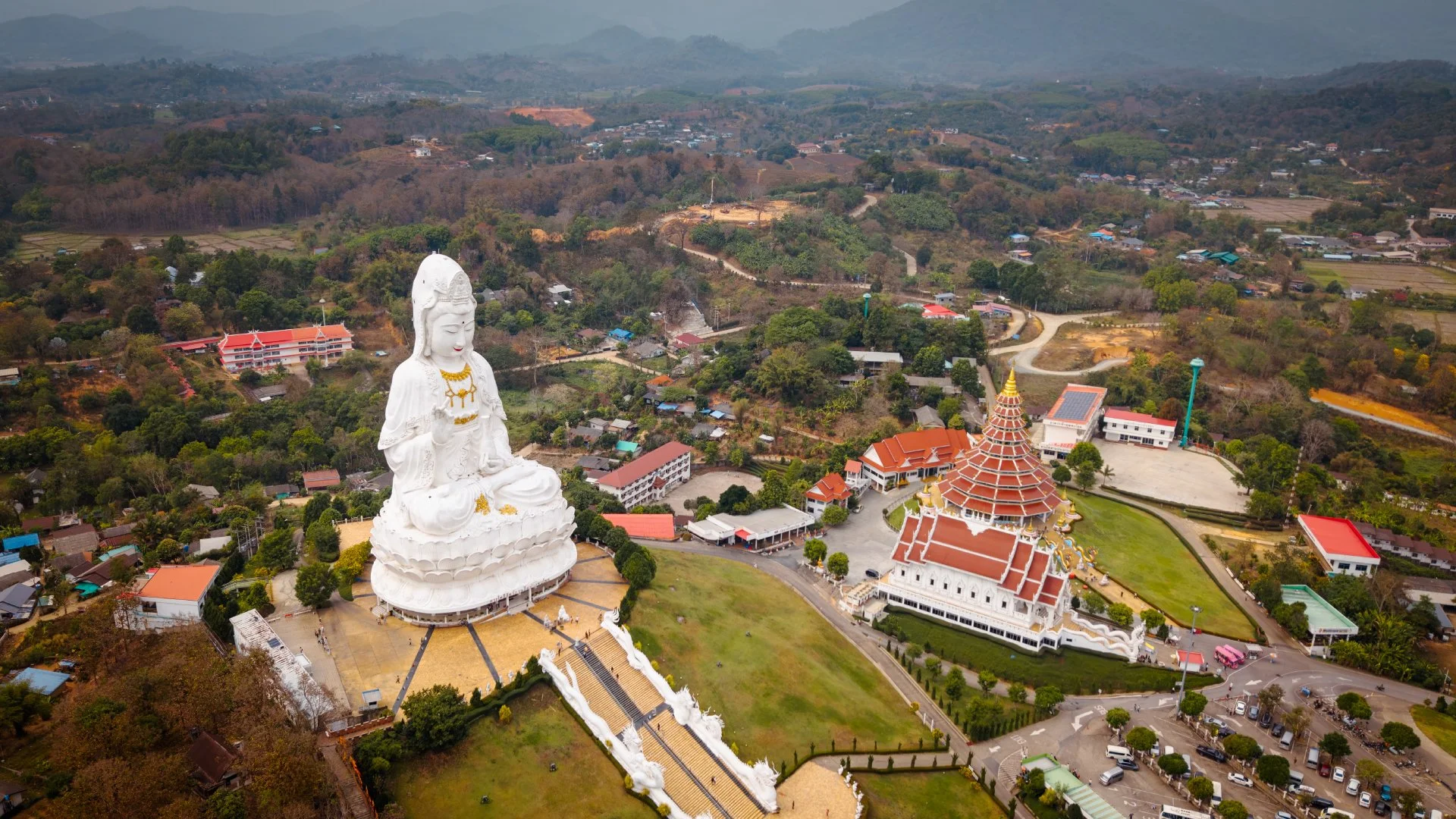
Drone shot of the Red Temple in Chiang Rai, Thailand.